
Social events
Visit to the Faculty of Astronomy and the Planetarium (Saturday 6th – 17h)
The Faculty of Astronomical and Geophysical Sciences of La Plata (FCAGLP) is located in the La Plata forest, blending historic architecture with green, open spaces. Home to both researchers and students, the Faculty hosts the Gran Ecuatorial Telescope and the Museum of Astronomy and Geophysics. In addition, the Planetarium of La Plata, located on the same grounds, is one of the most modern planetariums in Latin America, offering 4K projections on its 17-meter dome, providing an immersive experience that brings the cosmos to life.
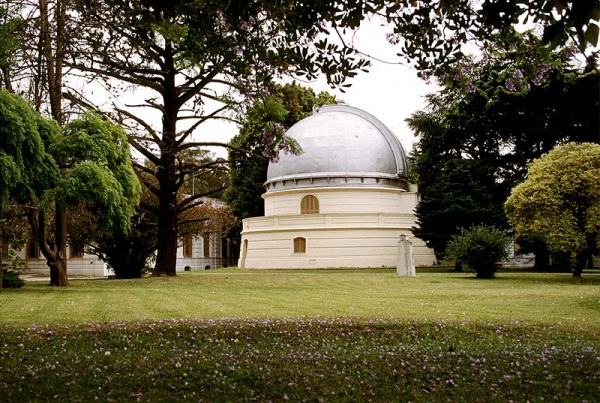 FCAGLP
 FCAGLP
 FCAGLP
 Museam of Astronomy and Geophysics
 Planetarium
Visit to the Argentine Radioastronomy Institute (IAR) + Argentine asado (Monday 8th – 11h)
 IAR
IAR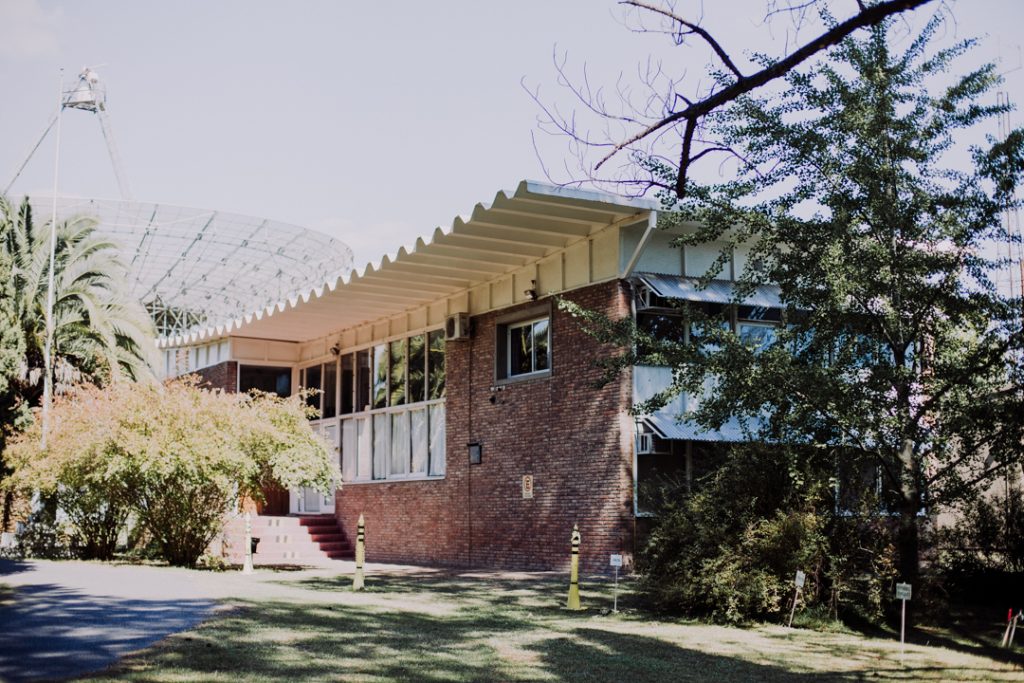 IAR
IAR IAR
IARWe visited the Instituto Argentino de Radioastronomía (IAR), a leading Argentine centre for astronomical research, technological development, and technology transfer. Located in the Parque Pereyra Iraola, IAR is a pioneer institution in radio astronomy in Latin America. The institute operates two twin 30-meter radio telescopes, working at 1420 MHz.
At midday, we enjoyed an authentic Argentine asado or barbeque, where grilled meats are shared in a relaxed and social atmosphere—a true part of our cultural heritage. We also offered a veggie option.
Public Outreach talks at the Planetarium
Two public talks were delivered in Spanish at the Planetarium of La Plata, aiming to reach the City’s public, taking advantage of the excellent professionals who will be participating in the School as Lecturers.
Friday, Dec 12th (19h): Mariano Méndez (Groningen) delivered a talk entitled: “Cazadores de agujeros negros: una introducción a los agujeros negros en el Universo“.
Resumen: Como nada puede escapar de ellos, tal vez nunca podamos observar directamente un agujero negro; sin embargo, estos misteriosos objetos siguen cautivando tanto a científicos como al público en general. En esta charla voy a contar cómo logramos “ver” algo que, en principio, no emite ninguna luz, y qué sabemos hoy sobre cómo se forman, crecen e influyen en su entorno. Aunque la física detrás de los agujeros negros es compleja, voy a tratar de explicar algunas ideas simples pero fascinantes que ayudan a entender, al menos de manera intuitiva, qué es realmente un agujero negro y por qué ocupa un lugar tan especial en el Universo.
Friday Dec. 5th (19h): Matteo Guainazzi (ESA) delivered a talk entitled: “Hermoso y desconocido: mirando al Universo por los ojos de satelites astronómicos“
Resumen: Agujeros negros, estrellas de neutrones, cúmulos de galaxias, ondas gravitacionales, galaxias activas, materia y energía oscuras … entender el Universo requiere observar fenómenos extremos: gas a temperaturas de millones de grados, partículas cruzando el cosmos con velocidades próximas a la velocidad de la luz, fuertes campos magnéticos. Para observar estos ambientes cósmicos, es preciso utilizar satélites y sus instrumentos. Ojos que nos permiten ver más allá y más en profundidad de lo que aun el más potente telescopio anclado en la Tierra puede alcanzar. Al mismo tiempo, estos satélites permiten experimentar con tecnologías de punta que pueden mejorar la calidad de nuestra vida diaria. Esta charla quiere ofrecernos una ventana sobre la ciencia astronómica que podemos hacer desde el espacio a través de las miríadas de satélites que la Agencia Espacial Europea (ESA) está operando.
 Rectorado
 Planetarium
 Planetarium
 Welcome Cocktail – Registrations (Sunday Nov 30th)
The Welcome Reception, including a standing dinner, will be held on Sunday, November 30th, at the AMAU Hotel from 19 to 21h.
Registrations will also start at 18h at the AMAU Hotel (Av. 51 Nro 692 e/8 y 9).


